Why Is The Speed of Light Finite?

In the past year of blogging for GLAMsci, most questions and feedback came from the speed of light series. I thought some housekeeping was in order to post an answer to the most frequently asked question - why isn't the speed of light infinite? To be fair, in my posts I discussed the finding of … Continue reading Why Is The Speed of Light Finite?

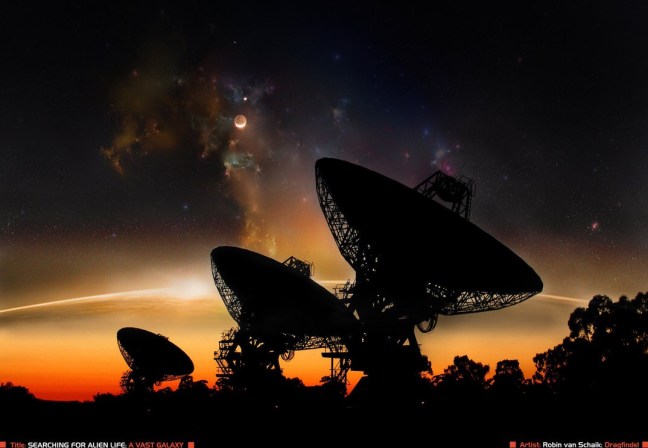
As far as the human race can tell, we humans seem to live on the only planet with any form of intelligent life on it. Since the late 1960s mankind has been to or sent probes and telescopes outside the Earth to find out more about the Universe. Science fiction has given extraterrestrial life a … Continue reading

The Origin of Life Series : Is It Irrational To Believe in Aliens? 

As far as the human race can tell, we humans seem to live on the only planet with any form of intelligent life on it. Since the late 1960s mankind has been to or sent probes and telescopes outside the Earth to find out more about the Universe. Science fiction has given extraterrestrial life a … Continue reading The Origin of Life Series : Is It Irrational To Believe in Aliens? 

The Origin of Life Series Part 2 : Formation of Life on Earth. 

Approximately 4.6 billion years ago our solar system started to form. The Big Bang being 9.2 Billion years before our own solar system started to form. By this time the universe looked pretty much as it does now due to the 9.2 billion years worth of expansion and cooling.  Within those 9.2 billion years hundreds … Continue reading The Origin of Life Series Part 2 : Formation of Life on Earth. 

The Origin of Life Series : We’re All Made of Stars

Carl Sagan famously proclaimed that we are all made of stars. Whilst this particular quote looks well on Facebook Cover Photos and on canvas wall prints at home, it actually has a significant amount of truth in it. Everything around us, including us, have building blocks which make us who we are as a species. … Continue reading The Origin of Life Series : We’re All Made of Stars

The Origin of Life Series

First of all I want to thank everybody for their questions and curiosity over the past several months of reading my blog series. I'm really excited to discuss all things time, space and the nature of reality but I noticed another trend in the feedback and questions.  The Forces of Nature Series went right back … Continue reading The Origin of Life Series

The Tiny World – Quantum Mechanics.

Credit : http://www.whatis.com Quantum Mechanics is the branch of physics which deals with the infinately tiny motions of subatomic particles. From the beginning of this blog the primary focus has been on Einstein's Relativity which governs the motions of the massive celestial bodies like galaxies, stars and blackholes.  One of the key principles of Quantum … Continue reading The Tiny World – Quantum Mechanics.

Travelling Faster Than The Speed Of Light and Time Travel. Part 4

One of the recurring questions throughout the series has been "can the light barrier be broken?" Unless humankind can build a spacecraft with zero mass, we will never truly reach the stars above. Only massless particles can travel at the speed of light. This expectation is unrealistic. The closest a craft can get to light … Continue reading Travelling Faster Than The Speed Of Light and Time Travel. Part 4

Speed of Light Series: The Day Time, Space and Reality Broke Down. 

In March 2011, physicists at the Large Hadron Collider at CERN (Centre for European Nuclear Research) in Geneva conducted an experiment to measure the velocity of a Neutrino, one of the elementary particles of nature. At the LHC, conditions can be artificially constructed to create particles which cannot be easily observed. This is how the … Continue reading Speed of Light Series: The Day Time, Space and Reality Broke Down. 

Discovery of an Exoplanet within habitable zone around the star closest to Earth.

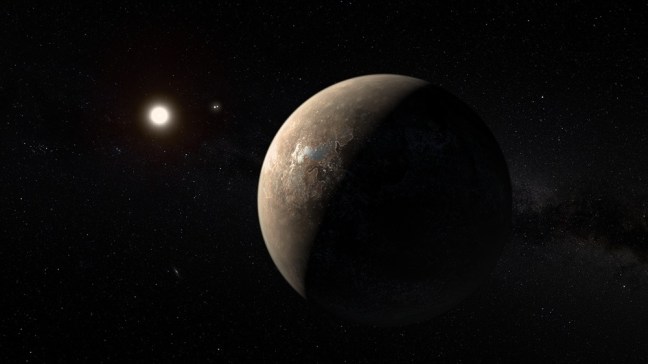
Astronomers involved in The Pale Dot Project found a potentially habitable planet orbiting Proxima Centauri. Named Proxima Centauri b, the planet orbits its parent star Proxima Centauri in around 11 days, with surface temperature favourable for the presence of liquid water on its surface. This rocky world has a slightly bigger mass than Earth, and … Continue reading Discovery of an Exoplanet within habitable zone around the star closest to Earth.