
Smallpox, anthrax, rabies, polio and many other vaccines.; insulin; chemotherapy for leukaemia; asthma medication; combined therapy for HIV infection; medicines for breast and prostate cancer; cervical cancer vaccine. That’s just a handful of world’s major medical advances that animal research has contributed to and I doubt there is anyone who hasn’t benefited from any of … Continue reading 5 things school children should know about animal research
The Degenerate Era – Part 2.

The time has come. The beginning of the end of our Universe. It is now 10 to the power of 14 years. Our Sun is ancient history in cosmic terms. It expanded into a Red Giant billions of years ago, swallowed the Earth and exploded in a supernova explosion. Credit : National Geographic Magazine … Continue reading The Degenerate Era – Part 2.
The End of The Universe – Part 1

#astrophysics #universe #space Credit : Grand Strategy Annex From the outset of the series we have gone through the timeline of the Universe from a fraction of a second after The Big Bang to the present day. This mini series is based on the work of Fred Adams and Gregory Laughlin in their book The … Continue reading The End of The Universe – Part 1
Falling into The Unknown : Black Holes
#astrophysics #space #blackholes #einstein The time has come to tackle the most feared of the heavenly bodies, Black Holes. Like almost everything in nature they have different properties, sizes, masses and characteristics. A Black Hole is formed when the internal pressure of a star is insufficient to resist the objects own gravity. Our Sun is … Continue reading Falling into The Unknown : Black Holes
TRAPPIST-1. Are We Alone?
Credit: NASA #trappist1 #space #astrophysics Recently NASA announced the prescence of 7 terrestrial planets around the TRAPPIST- 1 star. Most stars we see in the night sky have planets orbiting them. What makes this discovery particularly special? After all, planets are confirmed almost every day with many more thousands awaiting confirmation thanks to The Keplar … Continue reading TRAPPIST-1. Are We Alone?
Profiles in Excellence – Ahmed Zewail
I recently found out that I've been selected to attend the 67th Annual Lindau Nobel Laureate Meeting. Here Nobel prize winners from chemistry come and meet, lecture and guide the next generation of young scientists. It's an honour to be selected, as only the top 400 young chemists in the world are invited (special hello … Continue reading Profiles in Excellence – Ahmed Zewail
#MoreToScience – what’s it like to be a science writer?
I’m very keen on making it clear that there is #MoreToScience (what a lovely hashtag!) than the lab. In December, when I started this blog series, I promised you that I would introduce you to more career options after a science degree, in addition to science policy. I didn’t need to look far, only around … Continue reading #MoreToScience – what’s it like to be a science writer?
#Sentinel2go
At 01:49 GMT on March 6th 2017, the second of the Sentinel-2 satellites will blast off from the European Space Agencies launch site at Kourou, French Guiana atop a Vega rocket. I, along with a handful of other space-mad representatives from over 47 countries will be watching the launch live from ESA's Space Operations Centre, in … Continue reading #Sentinel2go
Does The Apple Fall to The Ground? Or Does the Ground and Everything on It Accelerate Upward into The Apple.
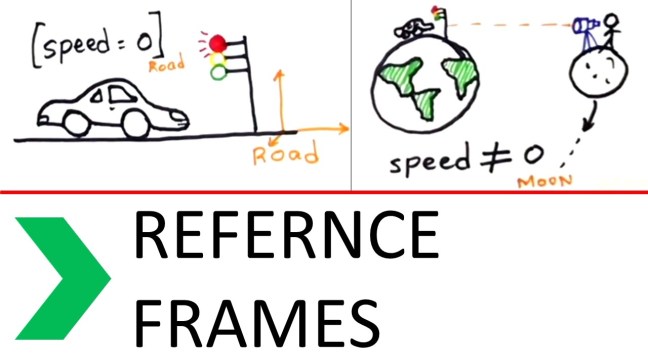
In my last post I discussed the principles of special relativity. To recap, the speed of light is invariant for all observers in all reference frames. Special relativity tends to deal specifically for non-accelerating frames of reference, what we call an "inertial frame". General relativity is much more in depth regarding reference frames and can … Continue reading Does The Apple Fall to The Ground? Or Does the Ground and Everything on It Accelerate Upward into The Apple.
Discovery of an Exoplanet within habitable zone around the star closest to Earth.
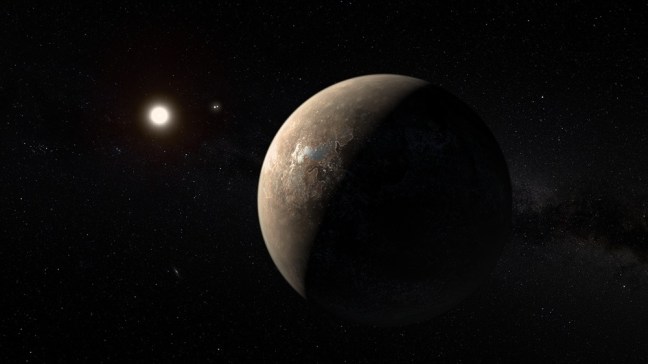
Astronomers involved in The Pale Dot Project found a potentially habitable planet orbiting Proxima Centauri. Named Proxima Centauri b, the planet orbits its parent star Proxima Centauri in around 11 days, with surface temperature favourable for the presence of liquid water on its surface. This rocky world has a slightly bigger mass than Earth, and … Continue reading Discovery of an Exoplanet within habitable zone around the star closest to Earth.
 GlamBlog